Search This Blog

Thursday, August 12, 2021

Ruby Throated Hummingbird

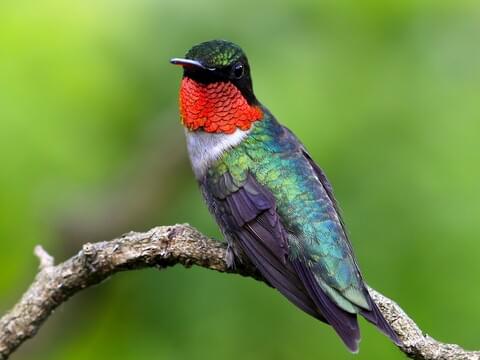
                     Ruby-throated Hummingbird Identification, All About Birds, Cornell Lab of  Ornithology

                                                             by: Matheus Franca                                                        

        The Ruby throated Hummingbird, how truly magnificent! It's english name is the Ruby Throated Hummingbird, however, it's Latin name is Archilochus Colubris which means a kind of hummingbird that is flourished. It's length is 3-3.5 inches, wingspan can be up to 3.1-4.3 inches, and their weight varies on their sex. Males are 3.4 grams, while females which are the bigger ones are 3.8 grams. The physical difference is that the males have a red throat and the females have a white throat. Their diet consists of spiders, tiny flies, gnats, aphids, and nectar. They are able to eat food that is double their weight, which is impressive. Their predators are hawks, crows, roadrunners, owls, etc. In terms of mating, the female chooses one male that she trusts to defend the feeding territory. On the other hand, the male leaves the female and mates with several other female hummingbirds. The process may be funny or unusual, but it is very effective because their are less females than the males in the population. Their natural habitat are primarily in woodlands such as forests and the woods. They spend most of their time in the winter, however, migrate in warmer climates when it's time for breeding. Their population is least concern because their are 7 million hummingbirds worldwide! Yet, the population is increasing everyday.

Northern Mockingbird


 Northern Mockingbird 

By: Jonathan Benissan 

  The Northern Mockingbird also known as Mimus Polyglottos which means many-tongued mimic is a bird with many qualities. They are very overprotective when it comes to territory that they would attack anyone even there own reflection. They were given the name because they were able to mimic certain noises that include dogs and sirens. They have been found in some tropical places but they mostly live in forests edges, bushes, trees, and desert brushes. They like to eat beetles but they also eat ants, grasshoppers, caterpillars,  wasps, berries and, fruits but they get eaten by hawks, cats, owls, snakes, and scrub jays. They are the least concern when it comes to going extinct because there is a huge number of them.

Tuesday, August 10, 2021

Grey CatBird


Grey Catbird

By: Jonathan Souza 

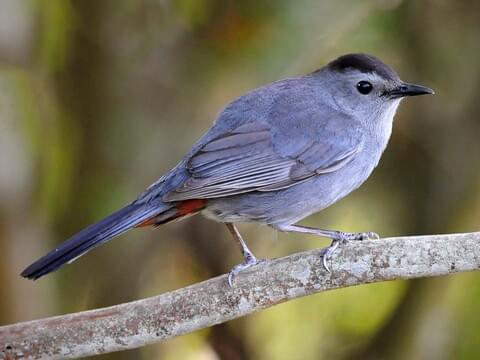
    The Grey Catbird can be found around the northern eastern part of the United States, mostly in the Carolines. The Latin name of the Grey Catbird is Dumetella Carolinensis which means Thorny Thicket From the Carolines. The Grey Catbird tend to migrate mostly at night to breed mostly in the South Eastern part of the United States. They tend to live more in tree and bushy areas around farms. The Catbird like to eat berries, small insects like ants, true bugs, and crickets. They have to hide their eggs because many of get eaten by snakes, domestic cats, and hawks. Their population over the years are decreasing because of many habitat lost due to climate change.
Gray Catbird Identification, All About Birds, Cornell Lab of Ornithology

Downy woodpecker


     Downy woodpecker got its name from Catesby. Both the male and female are the same size. The Downy Woodpecker is the smallest woodpecker seen in eastern North America. They are black and white. The males have a red patch on the back of their head so its easy to tell the difference between the male and female. Peak mating time is in between April and May. They drum to find a mate or to announce territory. They don't migrate as much even in the winter. But some birds farther up north might come down south. Their habitat is anywhere from forest to backyards. They eat mostly insects but they also eat seeds and berries. Their population is at the least concern. They are not close to becoming extinct.

Monday, August 9, 2021

Red-Tailed Hawk

Red-tailed Hawk

By: Vicente Correia


    The red-tailed hawk is a common bird that is named for its cinnamon-red tail. Its Latin name is Buteo jamaicensis, which means buzzard-hawk that was first studied in Jamaica. It is often seen soaring in the sky or perching high up on trees, buildings, or telephone poles and lives in open country, woodlands, mountains, roadsides, and plains. The red-tailed hawk is dark on top and lighter underneath with a dark band across its chest. Its talons and sharp beaks are ideal for hunting animals such as rodents, snakes, and smaller birds. The red-tailed hawk is a top-notch predator with a highly efficient and effective strategy where it dive-bombs its prey with its talons outstretched. This hawk is an awesome bird that continues to thrive with its population at 2,000,000 and continuing to rise. 

Thursday, August 5, 2021

Herring Gull

 The Herring Gull

By: Nathaniel Espaillat


       The Large Argentatus, Herring Gull, can be spotted mostly around coastal areas. The Latin version of Herring Gull which is Large Argentatus means "Large Silvery Bird." Herring Gulls live and will breed in coastal areas. They do migrate but Herring Gulls that arent breeding and the ones that are older tend to stay in colder areas, while the younger and the ones that are breeding migrate toward the warm areas. When Herring Gulls mate they usually do it around March and April and will lay their eggs in May. When they lay their eggs they will go to cliffs that are well hidden from their predators. They will also make their nest around supportive rocks so if its windy the windy wont blow the nest away. They tend to eat Fish, Crustaceans, Mollusks,  Marine Worms, and Sea Urchins. Since they stay at docks or board walks if they see food they will soar like a raptor get those little scraps of food. Herring Gulls are surprisingly counted as an endangered species, and their status is least concerning.


Wednesday, August 4, 2021

Turkey Vulture

 The Turkey Vulture, also known by its Latin name Carthates aura, is a large dark brown bird with a red bald head. It is 25.2-31.9 inches big and has a wingspan of 66.9-70.1 inches. They are social towards other turkey vultures and can be seen in flocks or groups. They have an imbalance in their flight which causes them to fly low, which they use as an advantage to detect carrion, dead animals. They are also able to detect carrion with their sense of smell, one of the best in the bird world. Turkey vultures prefer warmer climates and they can migrate as far as South America. They live in the Americas and their habitat is widespread, with the most common being the open country, next to a wooded area. The turkey vulture population is of least concern and there are thought to be 4.5 million worldwide.