Wednesday, August 3, 2016
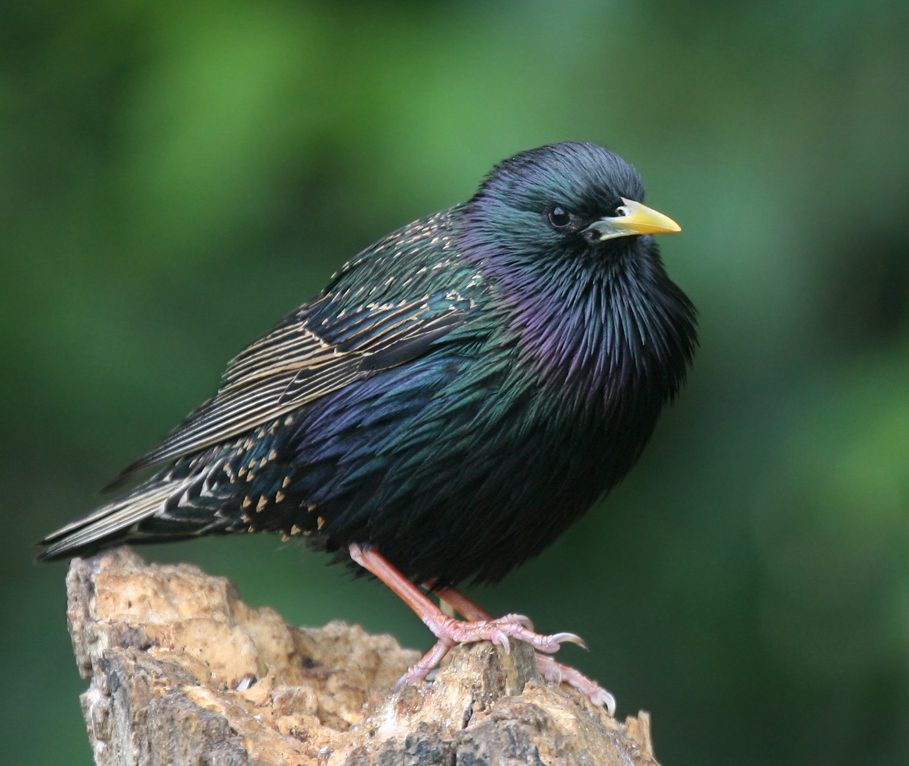
European Starling
The European Starling is a rather common bird and is the least of our concern. With it's glossy black feathers with a purple-greenish iridescent color to to them, both sexes are the same height, length, and wingspan. Both of the parents stay with the egg and incubates the egg until it hatches. The egg process can take up to 12 days.Starlings like to eat almost any thing, from things like insects garbage, fruits and plants like sumac. They were brought to us by Shakespearean enthusiast in the nineteenth century who really admired their great mimicking ability. These birds are everywhere throughout the United States and some parts of Canada. The adults like to migrate 40 degrees north while the younger ones like to migrate to the south. In the winter, their black (summer) feathers molt and are replaced with brown feathers with white dots. Most like to spend their day sitting on a wire or in a tree making weird noises,


Tuesday, August 2, 2016
Mourning Doves
Mourning Doves

Mourning Doves can be found almost anywhere around us in the U.S. With an outstanding 350 million soaring the skies and roaming the ground they are least concerned even while 20 million of them are being hunted every year. As a member of the Columbidae family Mourning Doves mostly eat seeds such as corn, millet, safflower, and sunflower seeds which makes up 99 percent of their diet.
Mourning doves migration differs from other birds because of their order. First the young leaves first, second the females, last of all the males. Not all of the males migrate some of them decide to stay in the North. Mourning birds Use the Coo sound howl to verify many things, to look for mate, claiming territory, and raising the young. The Mourning Dove can be found almost anywhere in the U.S. and are easily spotted with their Brown and Tank colored feathers which highly differs
from the Rock Pigeon.
Monday, August 1, 2016
Gray Catbird
The bird I did my Presentation on was the Gray Catbird which is a medium size bird that is slate gray, reddish undertail covert, and a dark eye and bill. The Gray Catbirds can be found in dense shrubs, and thickets of young trees in both the winter and summer. Catbirds from across North America to spend their winters along the Gulf Coast from Florida. Once the bird finds a good area they make their nest 3-10 feet from the ground made out of grass, twigs, weeds, and pieces of trash. they have nesting they usually have 3-5 eggs that has a greenish blue color. The food that they eat is insects like ants, beetles, and grasshoppers, they also eat fruit like blackberries, cherries, and elderberries. The interesting thing about catbirds they meow like actual cats so You never know if it's a cat or a catbird making meow sounds.
Blue Jays
Blue Jays are common bird to see in the Eastern/Central part of the United States. There scientific names are are Cyanocitta Cristata, which stands for Crested Blue Chattering Bird. Males and females have the same physical traits, crest, black breast band, and black eyeline. Even their blue, grey and white top coat is the same. There mating is a bit peculiar though, 3 to 10 males will follow a single female and try to serenade her with head bobbing and mating calls. Only one luck male will be picked to be the life long mate of that female, and to strengthen that life long bond the male will bring food to her. Blue Jays live almost most anywhere but they can be usually found near oak trees because of there fondness for acorns. A Blue Jays migration style is all over the place sometimes the will migrate south sometimes they wont it depends on them. Blue Jays eat pretty common bird stuff, insects, seeds acorns. They have been sometimes to known to eat the eggs and hatchings of other birds. Blue Jays are also pretty clever birds, they have a talent for mimicking calls of other birds like hawks and crows. They use this talent to scare other birds from feeders to get a easy meal.
Thursday, July 28, 2016
The Common Grackle
 The common grackle or "Quiscalus Quiscula" is the largest of three types of grackle and has a status of least concern. The males have black or purple feathers with a green or blue iridescence and the females are mainly brown throughout. They reside in the East and Southeast parts of North America. However, they will move north and central in order to breed. They are omnivorous and will forage the grounds, shallow waters and shrubs for things like insects, berries, grains or even other birds. They do what ever it takes to get food. They are usually in large groups and the males will begin to sing a very high pitch, scratchy song and perform a dance in order to find a mate.They rub other insects on their body to get rid of parasites and despite the common thought of these birds being regular stupid black birds, the Common Grackle can be quite clever and cunning.
Wednesday, July 27, 2016
Tufted Titmouse
Tufted Titmouse is a large bird coming from the small bird category. It has gray upper parts, pale gray underparts, and rust brown flanks. Its head has dark gray cap and crest, pale face and white eye ring. they are common east of the Great Plains in the woodlands and Midwestern United States. they started out in Mississippi and now make their way up as far as Canada. Tufted titmice breed during march through may and average around 8 eggs per season. Also they build their own nests only a few miles from where they fly. The nests are made from other animal hairs and feathers. They are very active birds and often seen flying around in trees and hanging upside down looking for food. Mostly are known for singing and singing their most famous song "Peter-Peter-Peter." 
Tuesday, July 26, 2016
The Mallard Duck
The Mallard Duck, though relatively simple and common, is quite the interesting avian. Anas platyrynchos, its scientific name, means flat billed duck in Greek (platyrynchos) and Latin (anas). The Mallard can primarily be found in wetlands in North America, migrating southwards and northwards during the early fall and late winter respectively. The mallard is also a good example of sexual dimorphism, with males possessing the iconic iridescent green head and yellow bill while females are mottled brown throughout. In courtship, mallard drakes attempt to impress the hens, who select mates, by engaging in several "dances," such as a head bob. One of the more interesting things about the mallard duck is how its diet changes based on its habitat and time of year- when insects begin to produce offspring, the mallard eats eggs and larvae along with its normal seeds and aquatic vegetation. Furthermore, mallards that live in places with humans are more friendly to the people because they are sometimes fed by them.
Subscribe to:
Posts (Atom)